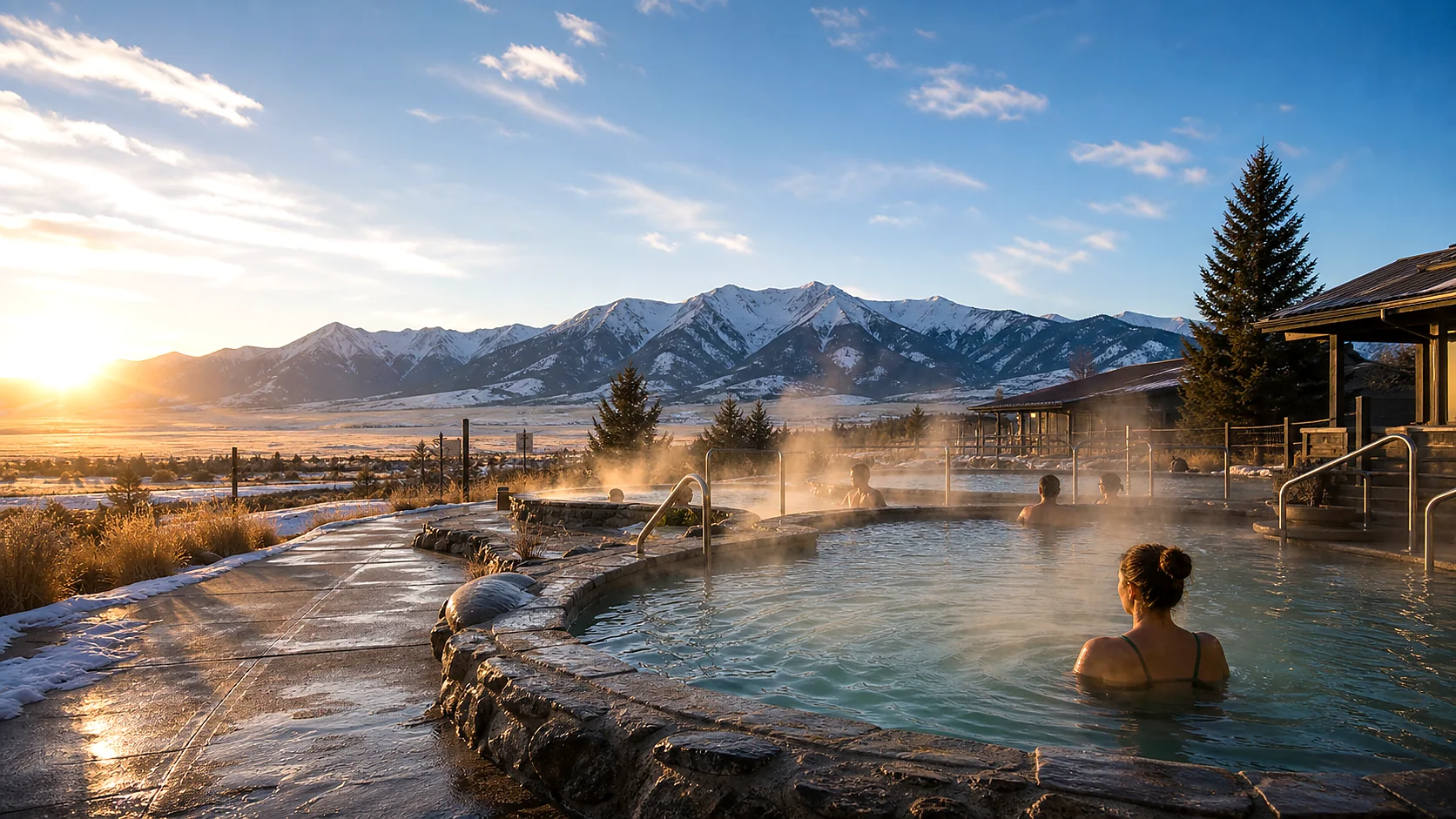
Bozeman Hot Springs has been a Gallatin Valley bathing destination for over a century, anchored by the same geothermal belt that feeds Norris Hot Springs 45 minutes south and eventually connects underground to the Yellowstone volcanic system. The current facility expanded through the 1990s and 2000s into the 12-pool community hot springs and fitness operation it is today, with the on-site campground (now closed) and the live-music programming added in the 2010s.
Twelve pools cover the full temperature range. Two outdoor hot pools at 104 F and 106 F are the primary soaking destinations. Several indoor mineral pools at varying temperatures fill out the warm-soak inventory, with a family swim pool kept around 90 F for kids and a 59 F cold plunge for contrast therapy. Dry and wet saunas round out the rotation. The indoor pools run on a flow-through system: water from the geothermal source flows through continuously and the pools are drained and cleaned every night, which means no chlorine or bromine is added.
What sets Bozeman Hot Springs apart commercially is the live-music programming. Acoustic shows every Thursday from 7 to 10 PM and full-band performances every Sunday from 7 to 10 PM, both included with pool admission. The bill ranges from local Montana country to touring rock and EDM acts; the venue books year-round. For visitors used to silent spa-grade hot springs, this is a polar-opposite atmosphere on music nights and the regular daytime quiet soak the rest of the week.
Practical positioning: Bozeman Yellowstone International Airport is 13 miles east, Big Sky is 45 minutes south, and West Yellowstone is 90 minutes south. The facility serves as a convenient stop on any drive between Bozeman and the Yellowstone gateway, and as a weekly community amenity for locals. Day passes are unusually affordable, $12 to $17, which keeps the venue accessible to families and locals rather than just destination travelers.