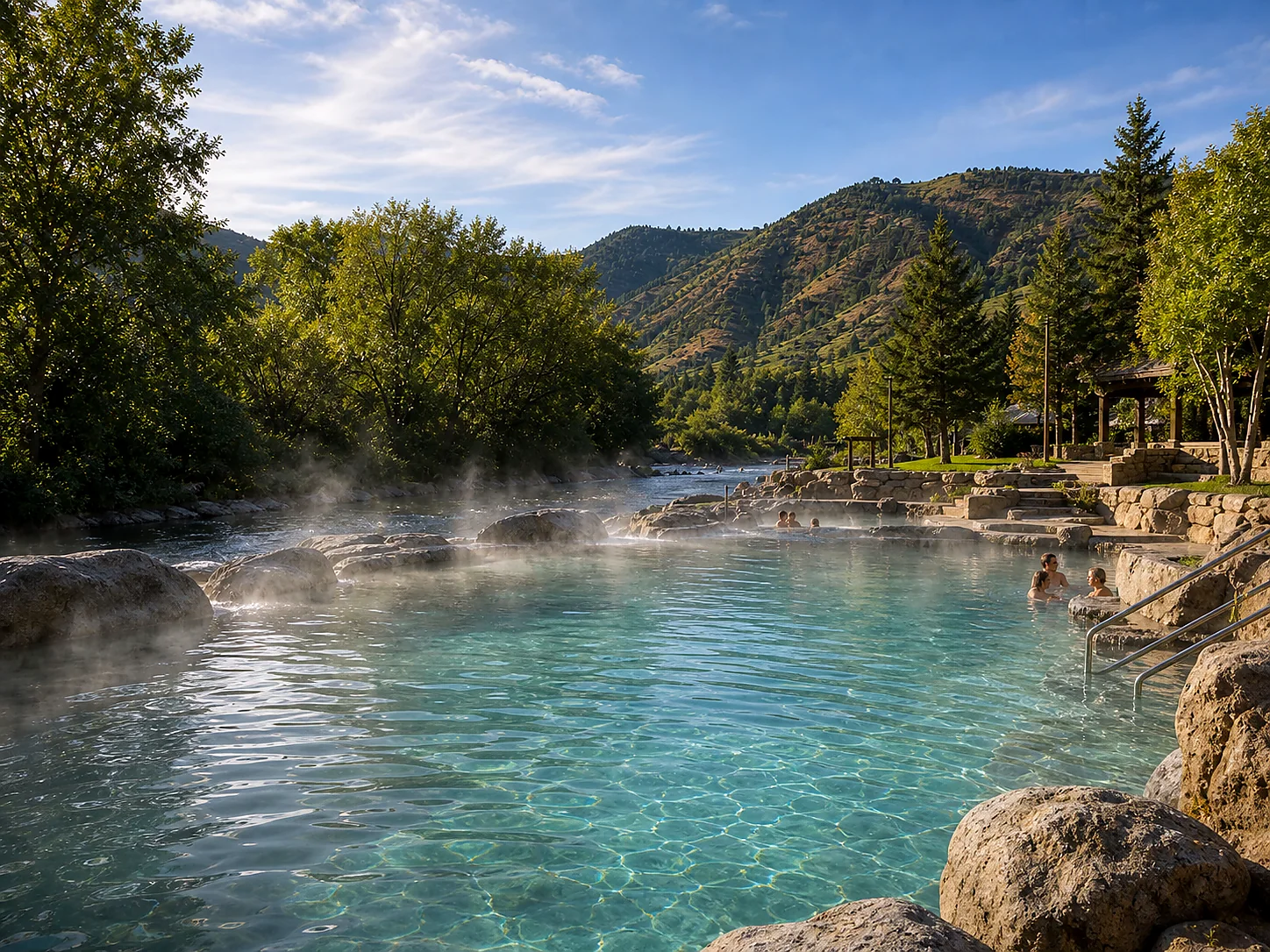
The land around Lava Hot Springs has been a soaking site for centuries. Northern Shoshone and Bannock tribes used the area annually as part of a Great Plains-to-Pacific Northwest migration route, and the springs were neutral ground shared among tribes. The geography channeled travelers into this corner of southeastern Idaho, and the springs themselves were considered sacred for their healing properties.
The site became state-managed in 1902, when an act granted the springs and surrounding land to Idaho to be held for public use. The town that grew around them was originally called Dempsey after a local trapper, briefly renamed Hall City in 1911 for the Englishman who donated the village land, and finally renamed Lava Hot Springs when officially incorporated on July 24, 1915. The Lava Hot Springs Foundation, a state-managed nonprofit, operates the pools today and reinvests revenue in the town.
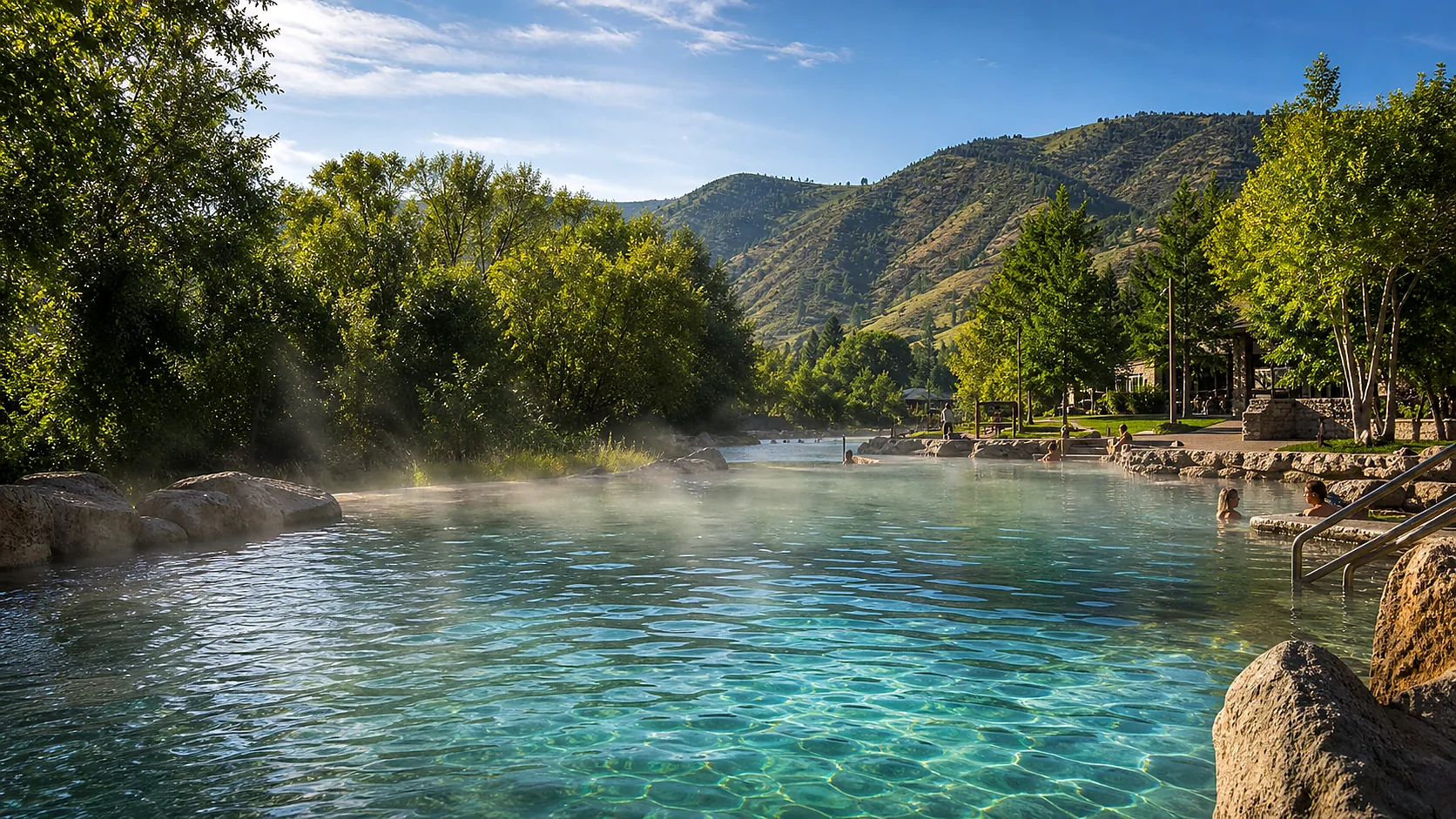
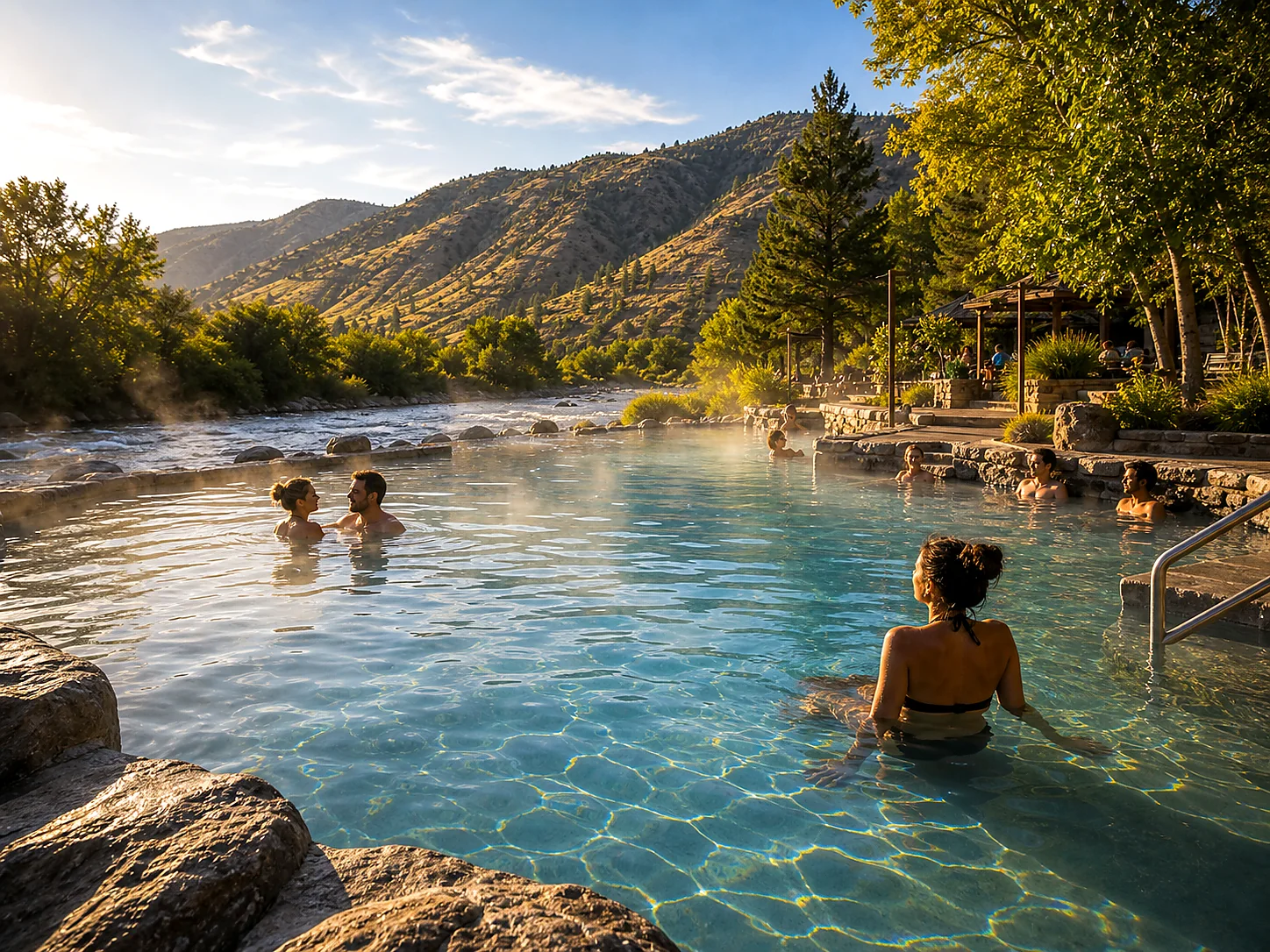
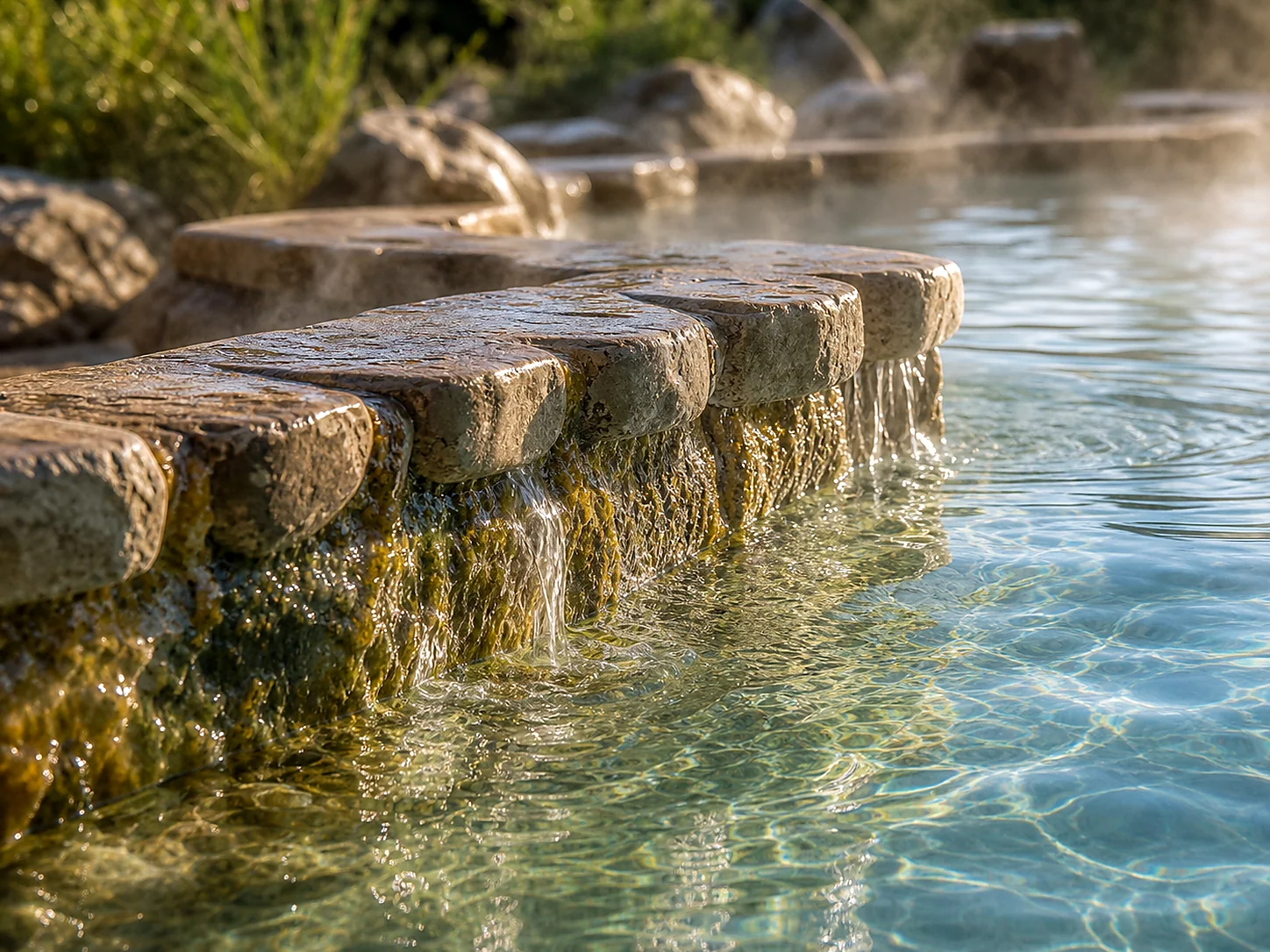
The pool inventory is unusually clean. Five outdoor mineral pools span 102 F to 112 F, with the hottest pool at source temperature and the coolest at the end of the cooling cascade. The water bubbles directly into the bottoms of the pools rather than being piped in, and roughly 2.5 million gallons turn over every 24 hours. No sulfur smell, no chemical additives, no fluctuation; the system is essentially self-flushing.
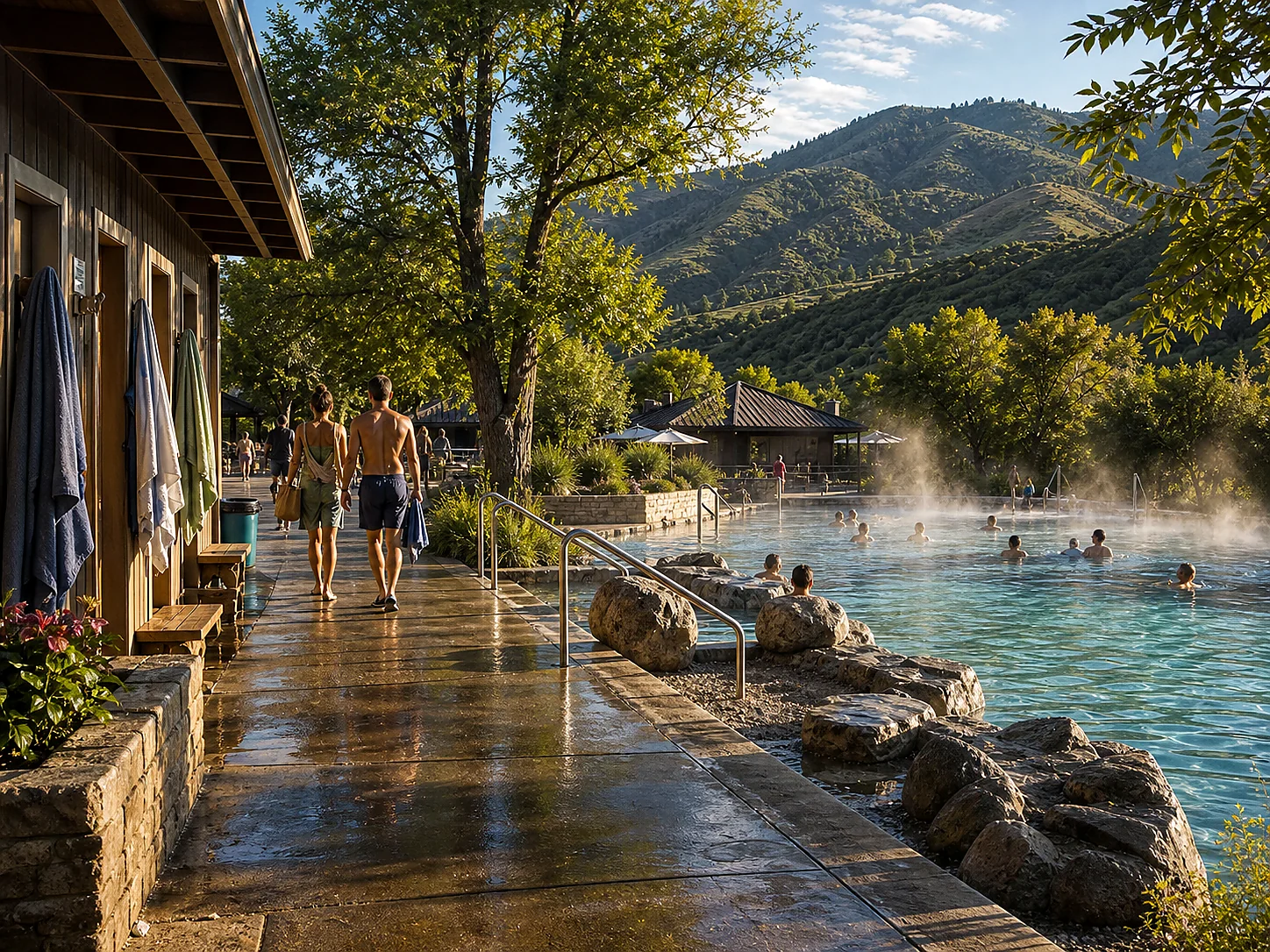
Practically, Lava is a soak-town more than a resort. The Hot Pools sit at the east end of Main Street with the small downtown wrapping it: a dozen small motels and inns within five minutes' walk, half a dozen restaurants, and the separately-priced Olympic Swimming Complex at the other end of town with its 10-meter diving platforms and water slides. Many visitors do the Hot Pools as a sunset adult soak and the Olympic Complex as a daytime family swim.