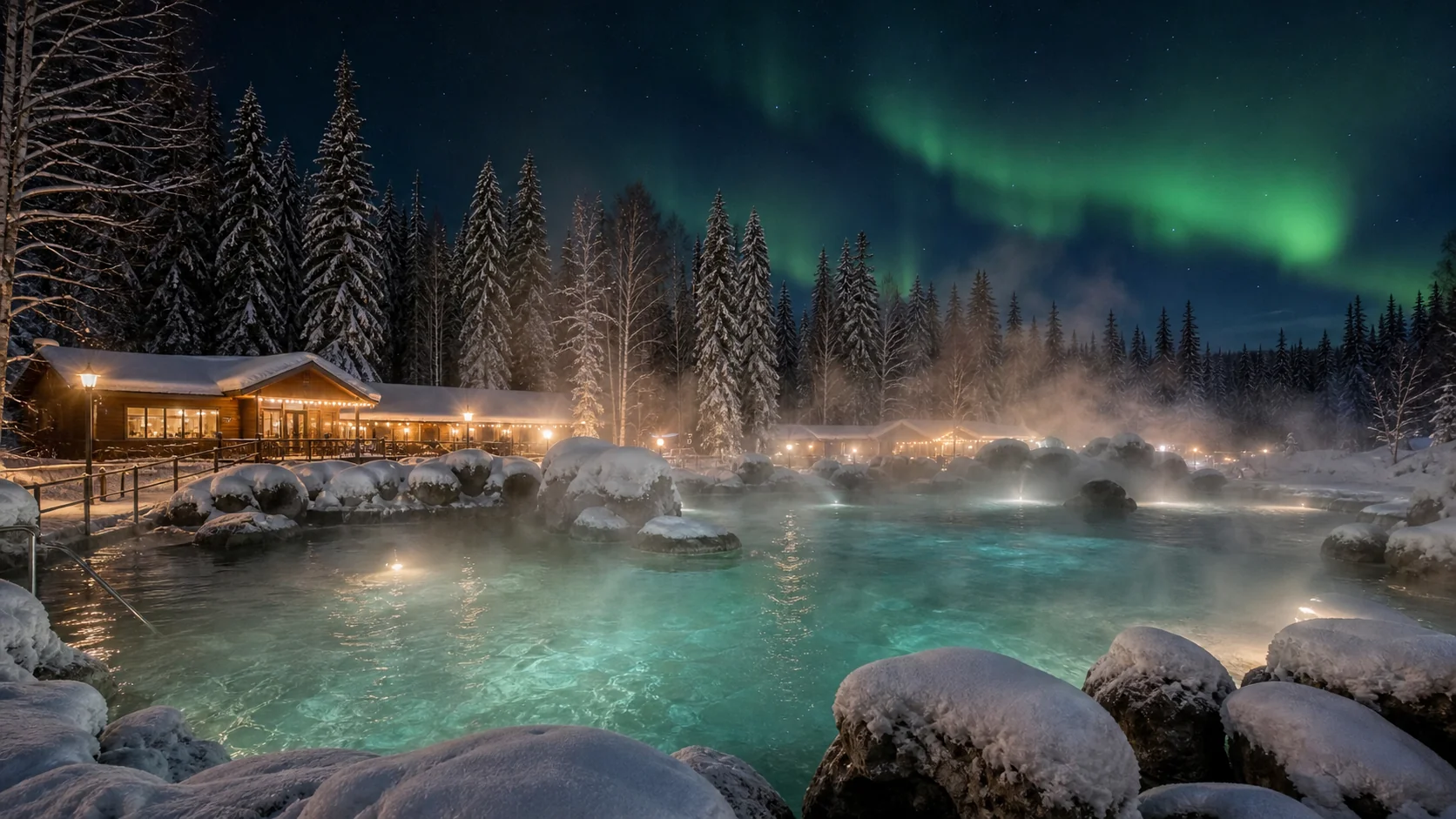
Chena Hot Springs were discovered in 1905 by two miners exploring up the Chena River drainage from Fairbanks. The springs became a regional bathing destination almost immediately and have operated continuously as a resort for over a century. The current Chena Hot Springs Resort is one of the oldest continuously-operating hot springs in Alaska and the only major hot springs in the state that you can reach on a road rather than by air or boat.
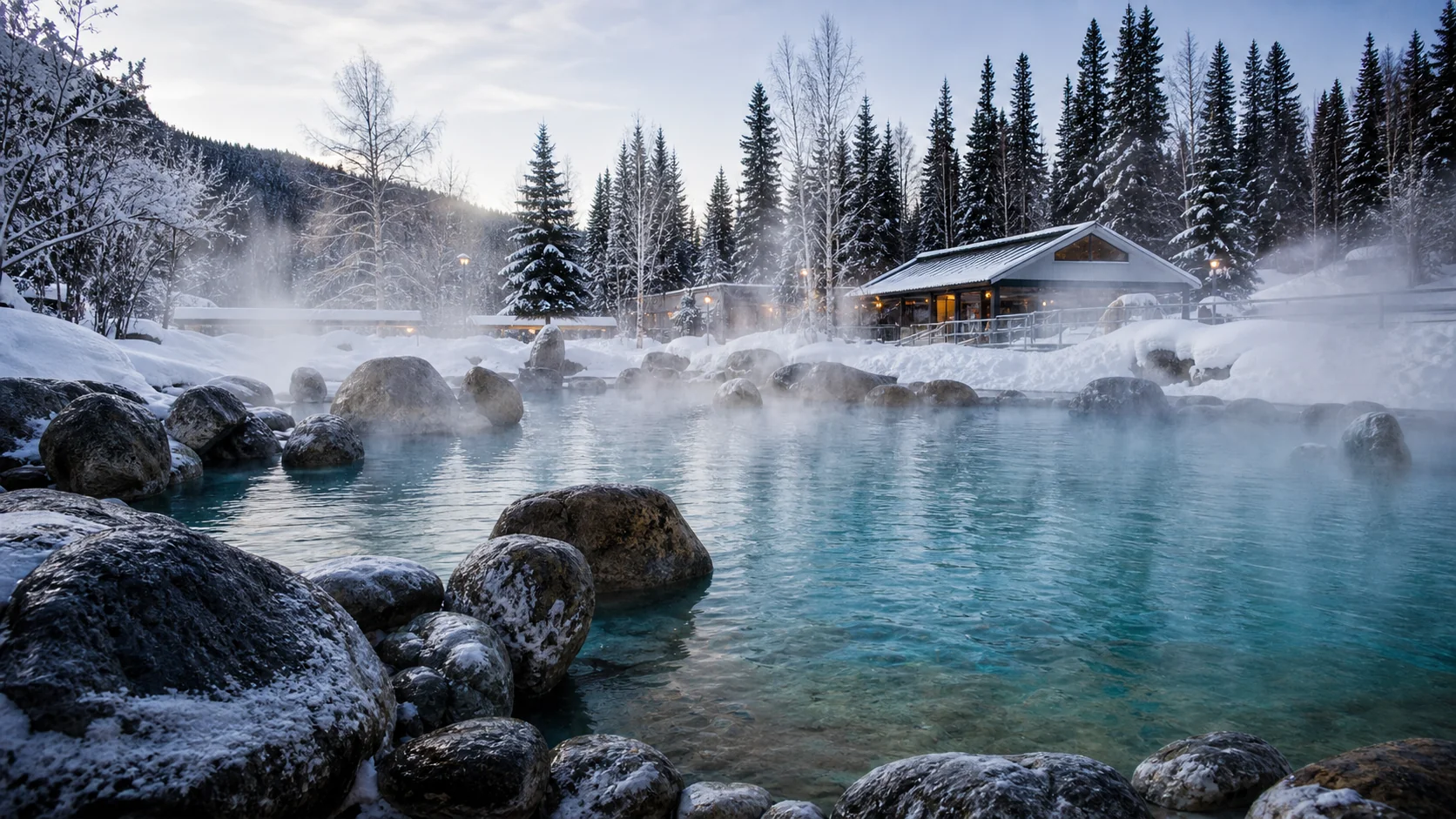
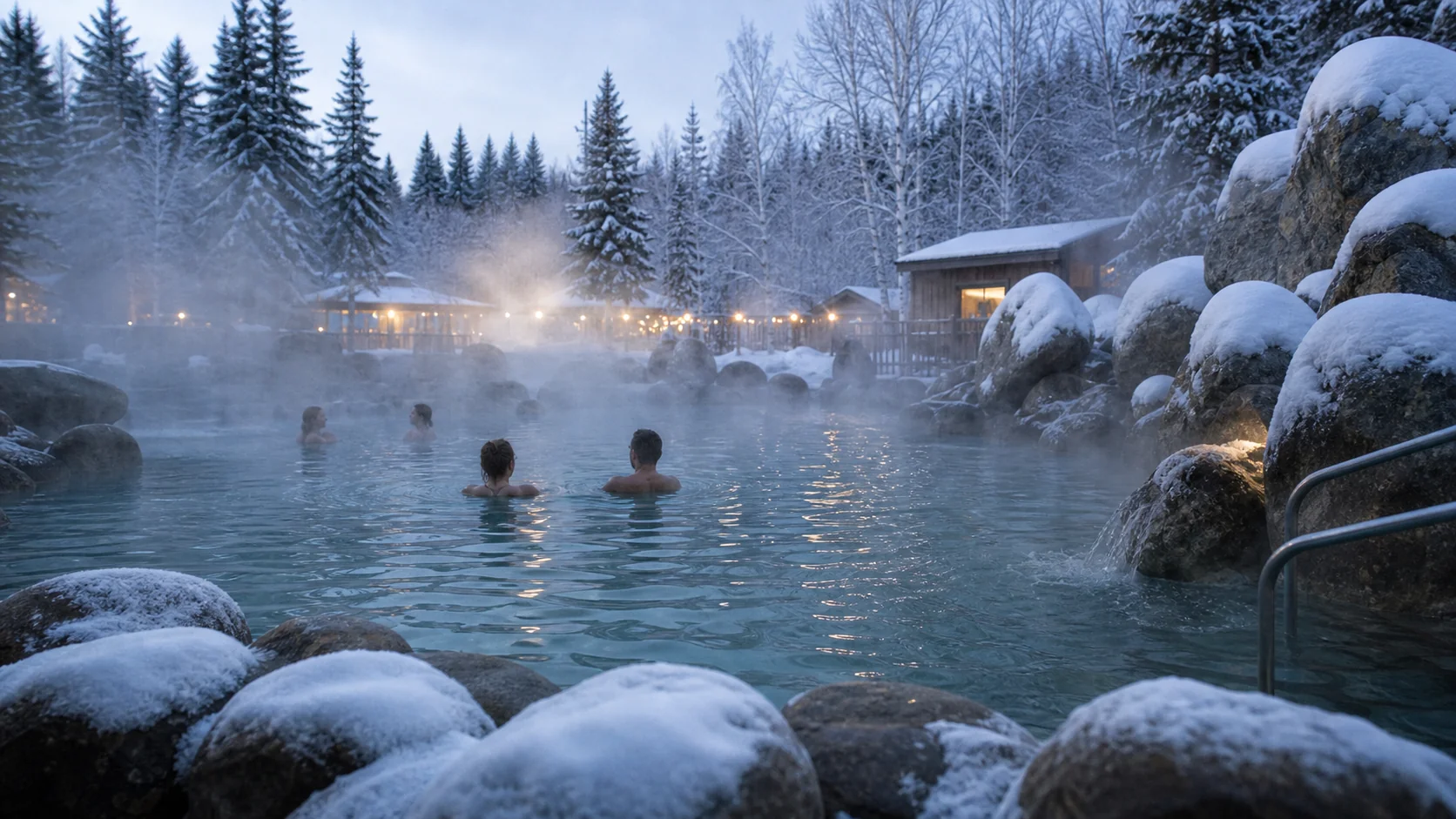
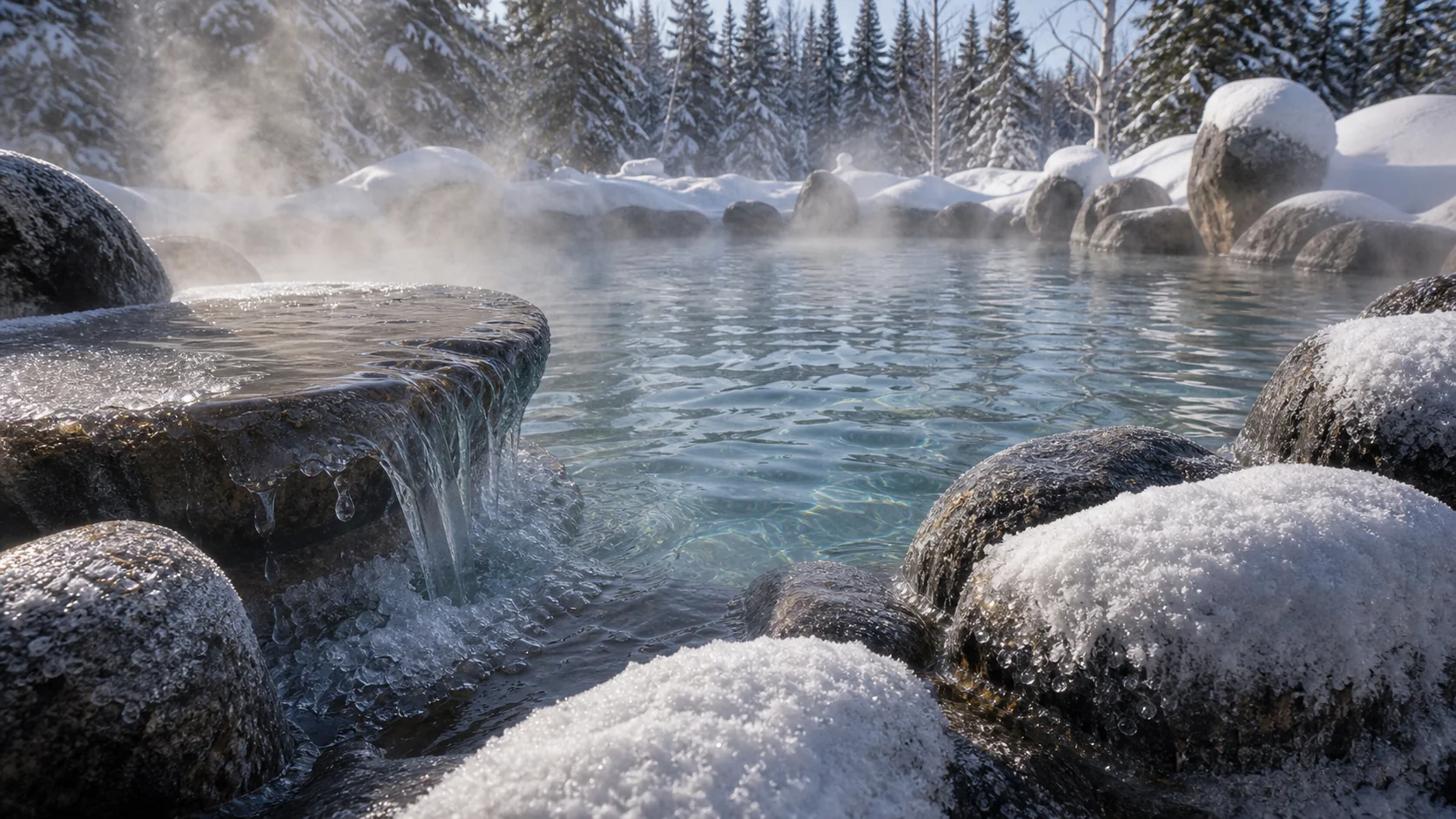
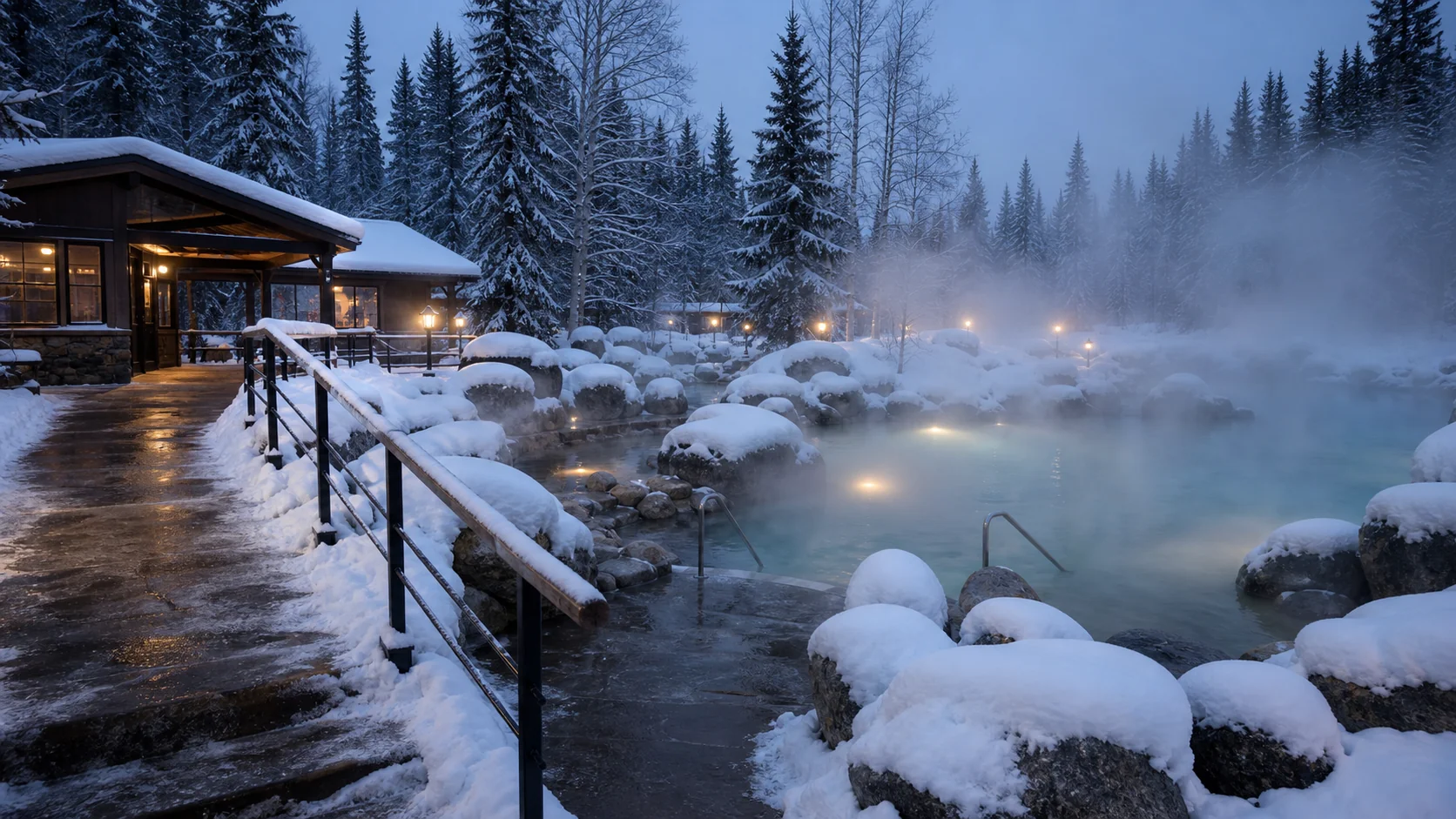
The marquee feature is Rock Lake, an outdoor mineral lake fed by the natural geothermal source and kept at roughly 106 F year-round. Rock Lake is reserved for adults 18 and over. The visual signature of Chena is winter Rock Lake: steam rising off the natural lake against snow-covered black spruce, with the aurora borealis moving overhead from late September through late March. This image is what every Alaska tourism brochure uses to sell aurora trips, and it is genuinely Chena's product.
The rest of the property is family-friendly: an indoor family swimming pool kept around 90 F, two indoor hot tubs at 104 F, and a chlorinated treatment system for the indoor pools (unusual for hot springs but necessary for indoor hygiene). The Aurora Ice Museum, built in 2005 using a patented absorption chiller, is the largest year-round ice environment in the world; the interior is kept at 25 F and is decorated with crystalline sculptures by world-champion ice carvers. Tours are separately priced from the pools.
Chena is also a working geothermal research site. The resort uses geothermal heat to generate electricity and to grow vegetables in heated greenhouses through the Alaska winter. Resort guests can tour the renewable-energy operations as part of the visit. Lodging ranges from main lodge rooms to private cabins and yurts; reservations are essential, especially during aurora season when the property fills weeks in advance.