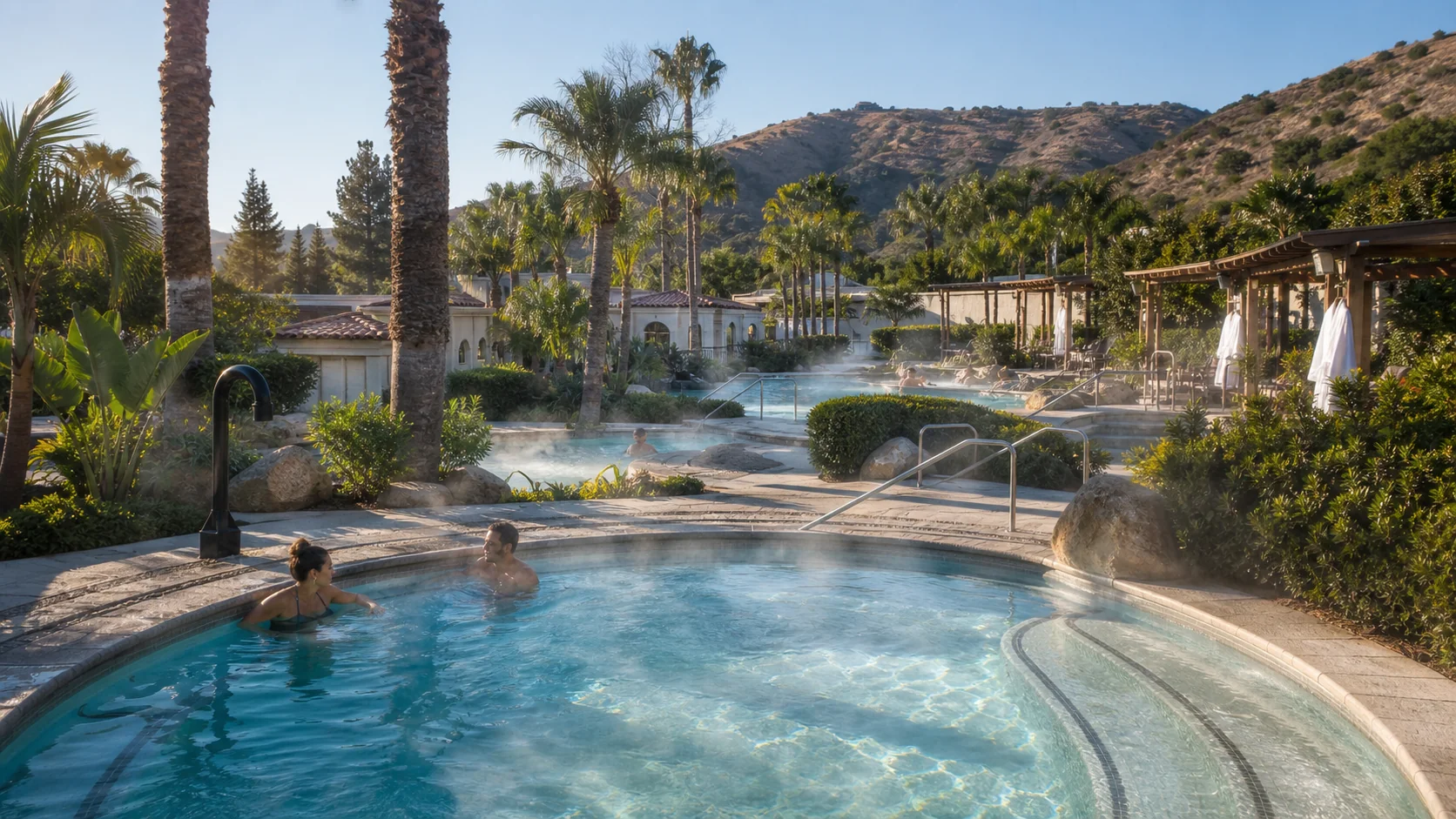
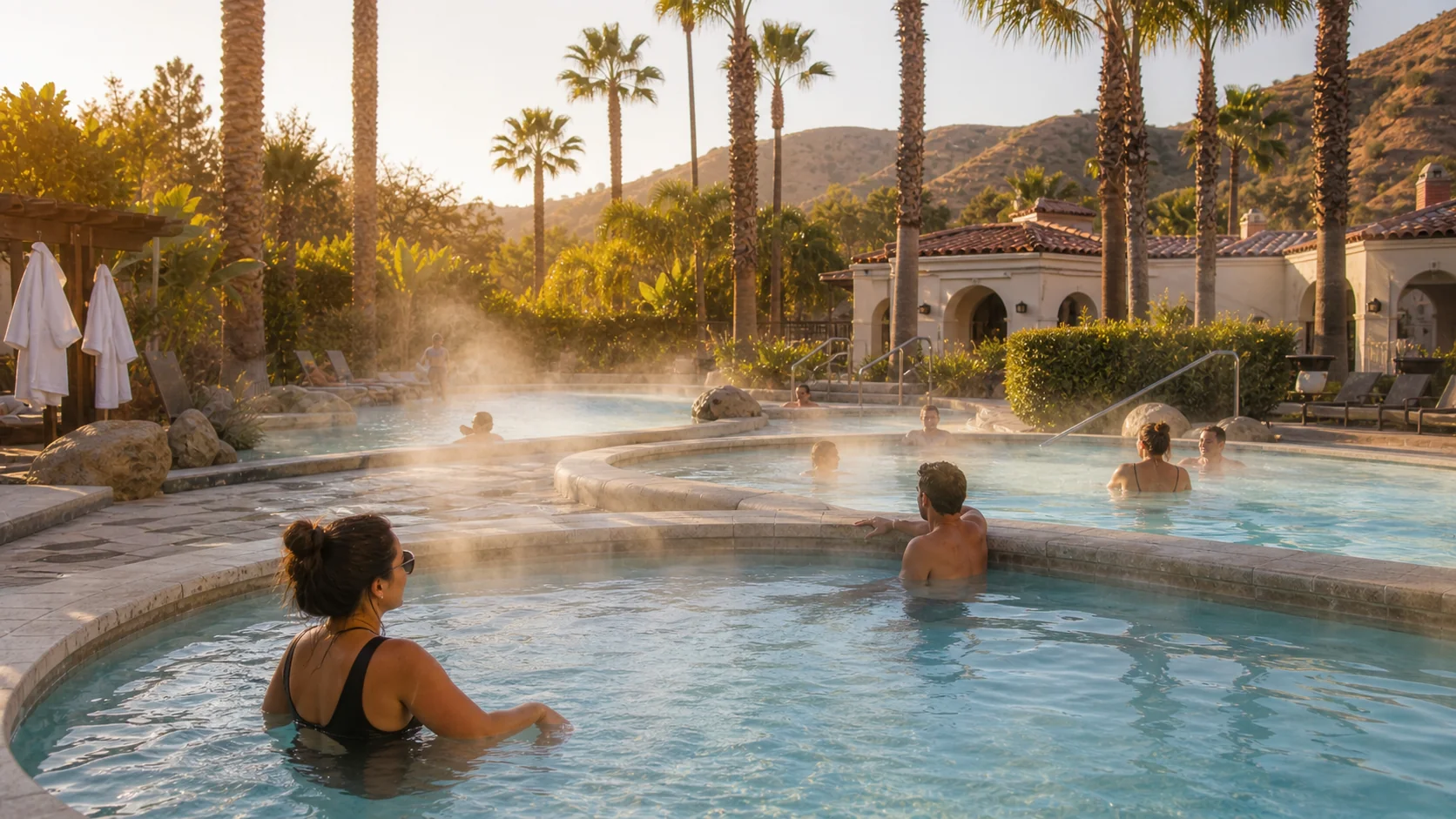
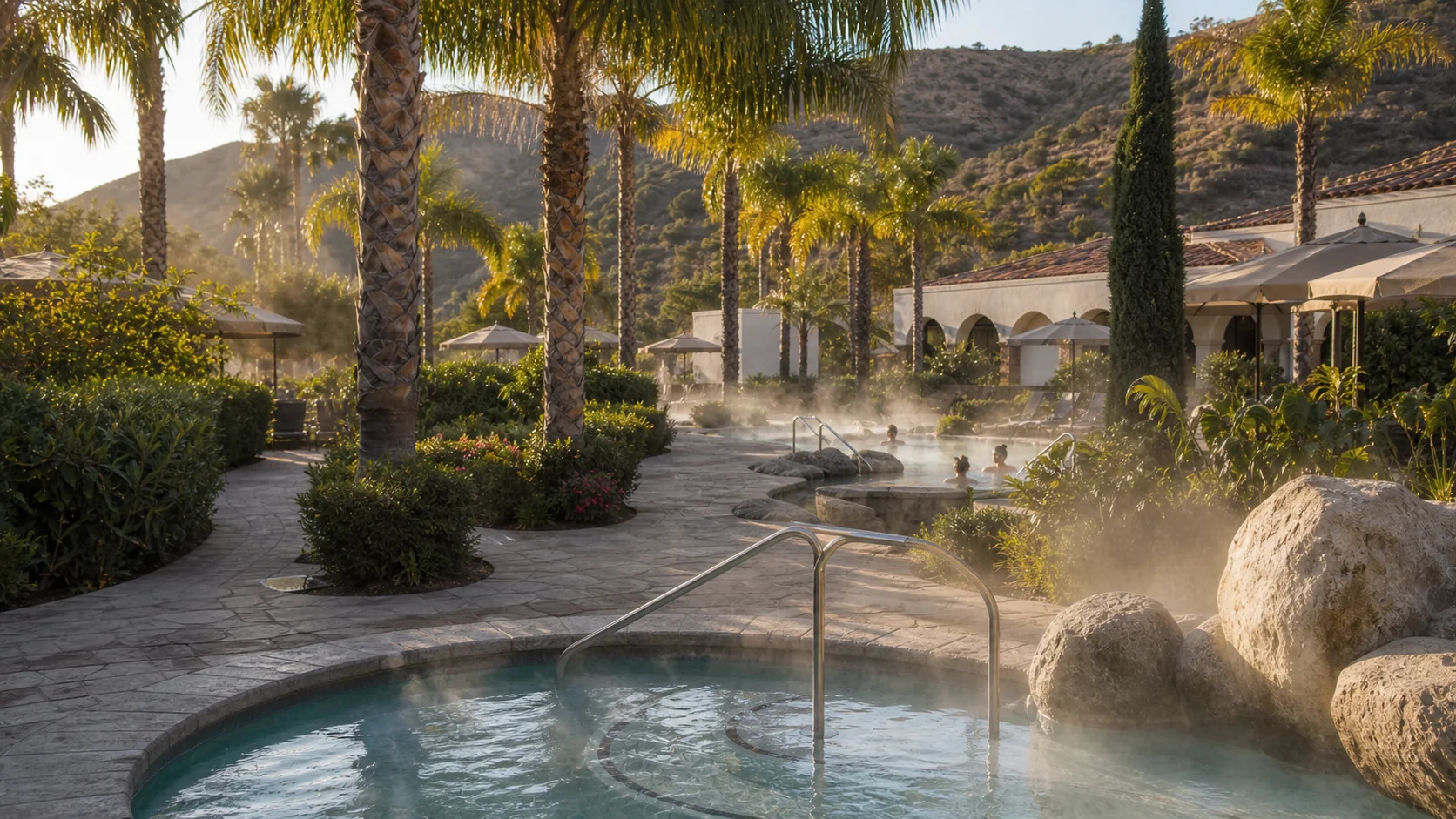
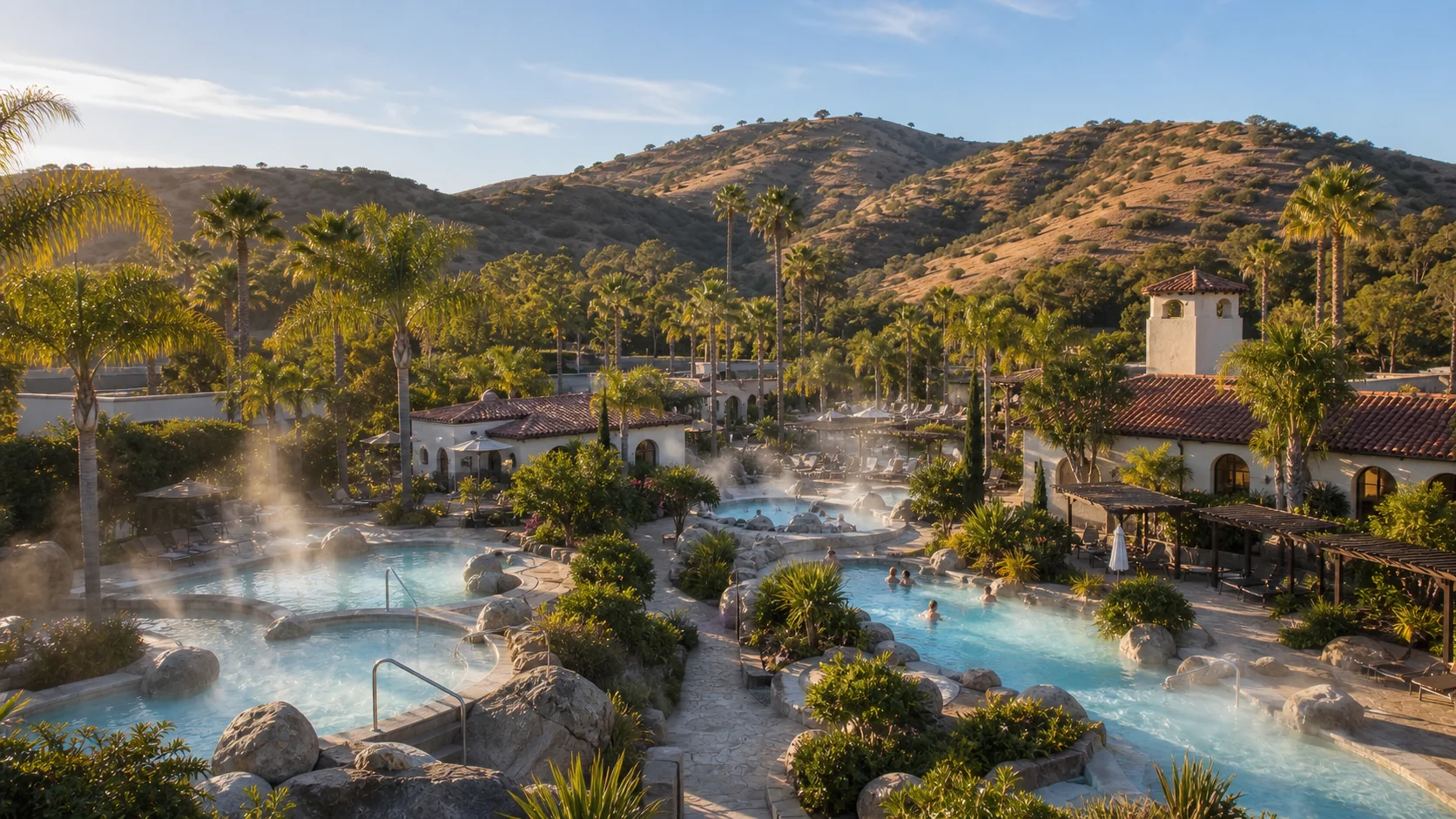
Murrieta Hot Springs has been a destination since the 1860s, when the Pechanga people used the springs and Spanish settlers built a small bathing operation. The grand resort era began in 1902, peaked in the mid-twentieth century, and ended in 1995 when Calvary Chapel purchased the property and converted it into a Bible college campus, closing the pools to the public for nearly thirty years.
Olympus Real Estate Group bought the property in 2020 and spent four years on a multi-million-dollar restoration. The resort reopened in February 2024 with the historic buildings preserved, the pool inventory expanded, and a clear separation between family-friendly common pools and a series of adults-only zones. Thirteen mineral pools now operate on the 46-acre property.
The pricing structure is built around tiered day passes. The standard Hot Spring Day Pass at $99 Monday through Thursday gets access to the common pools. The Adult-Only Relaxation Terrace Pass at $129 adds six additional adult-only geothermal pools and the Serenity Garden. The Twilight Pass at $49 is the cheapest entry and runs in the evening. Spa treatment guests get day pass access included with their service.
Practically, Murrieta is the closest serious mineral resort to the Southern California population centers. San Diego is 70 minutes south; the LA basin is 90 minutes north; Temecula wine country is 15 minutes south for dinner. It has filled an obvious gap in the SoCal soak market that the Coachella Valley resorts (Two Bunch Palms, Two Bunch Palms, Miramonte) used to own by default.