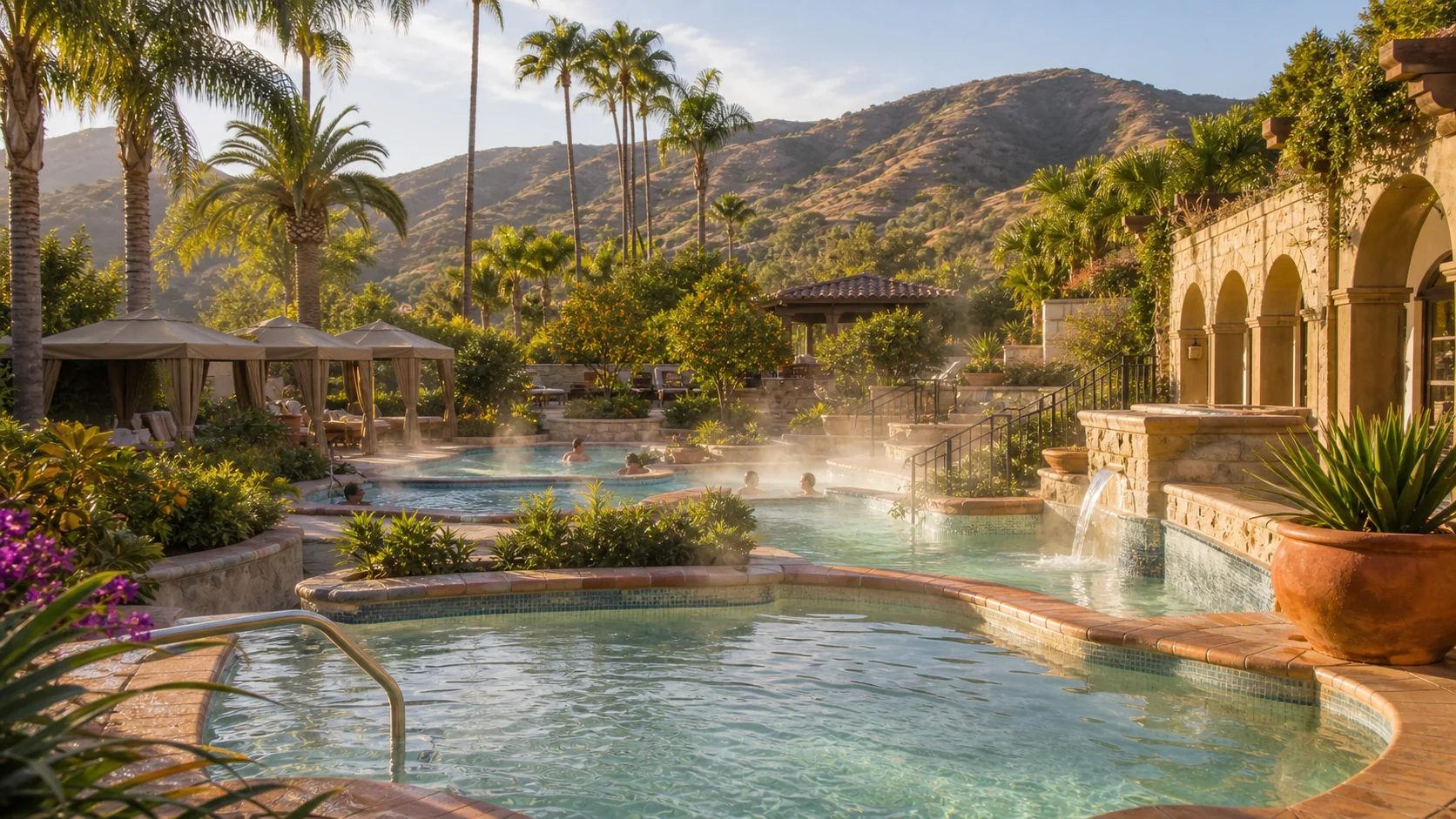
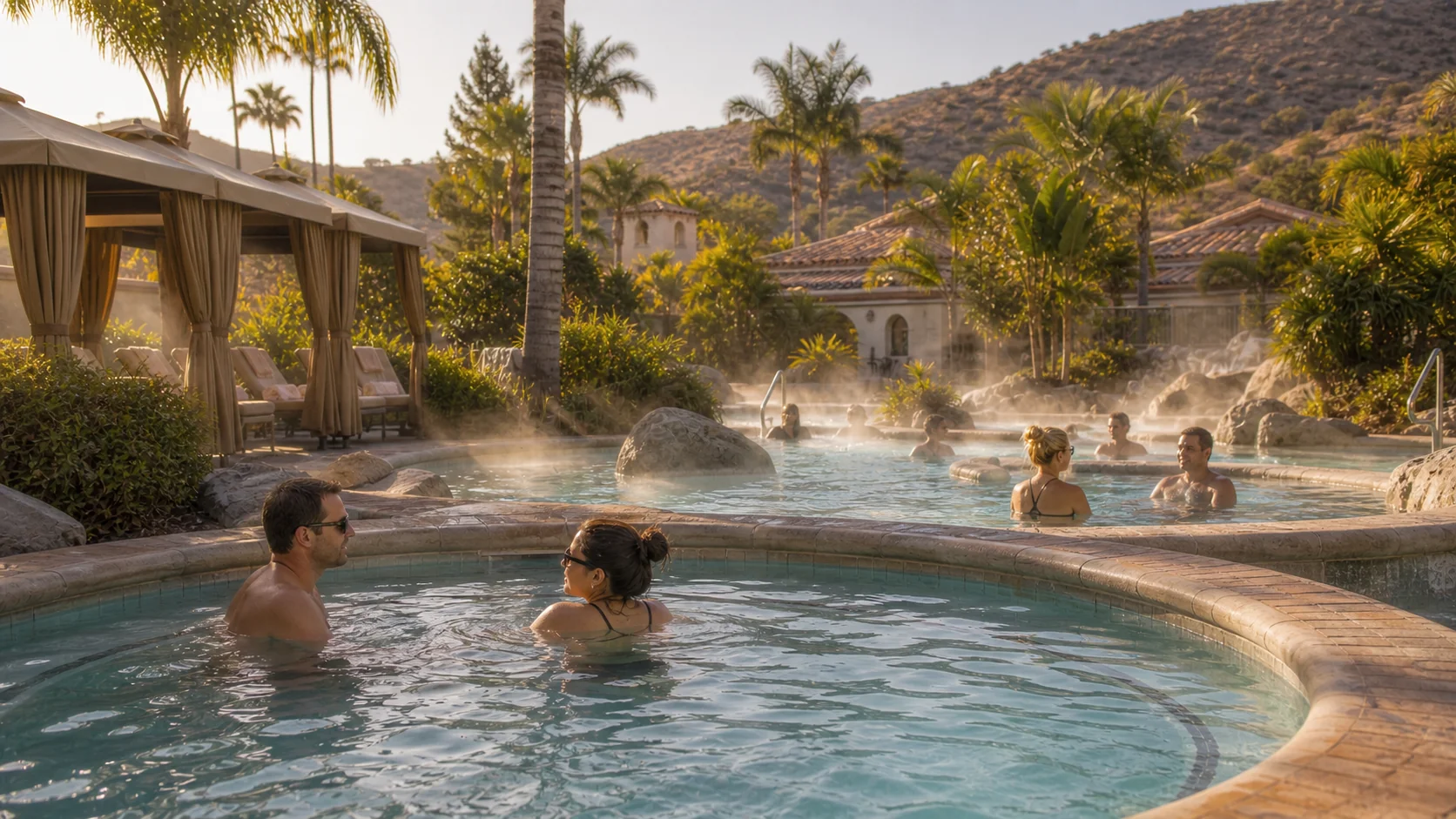
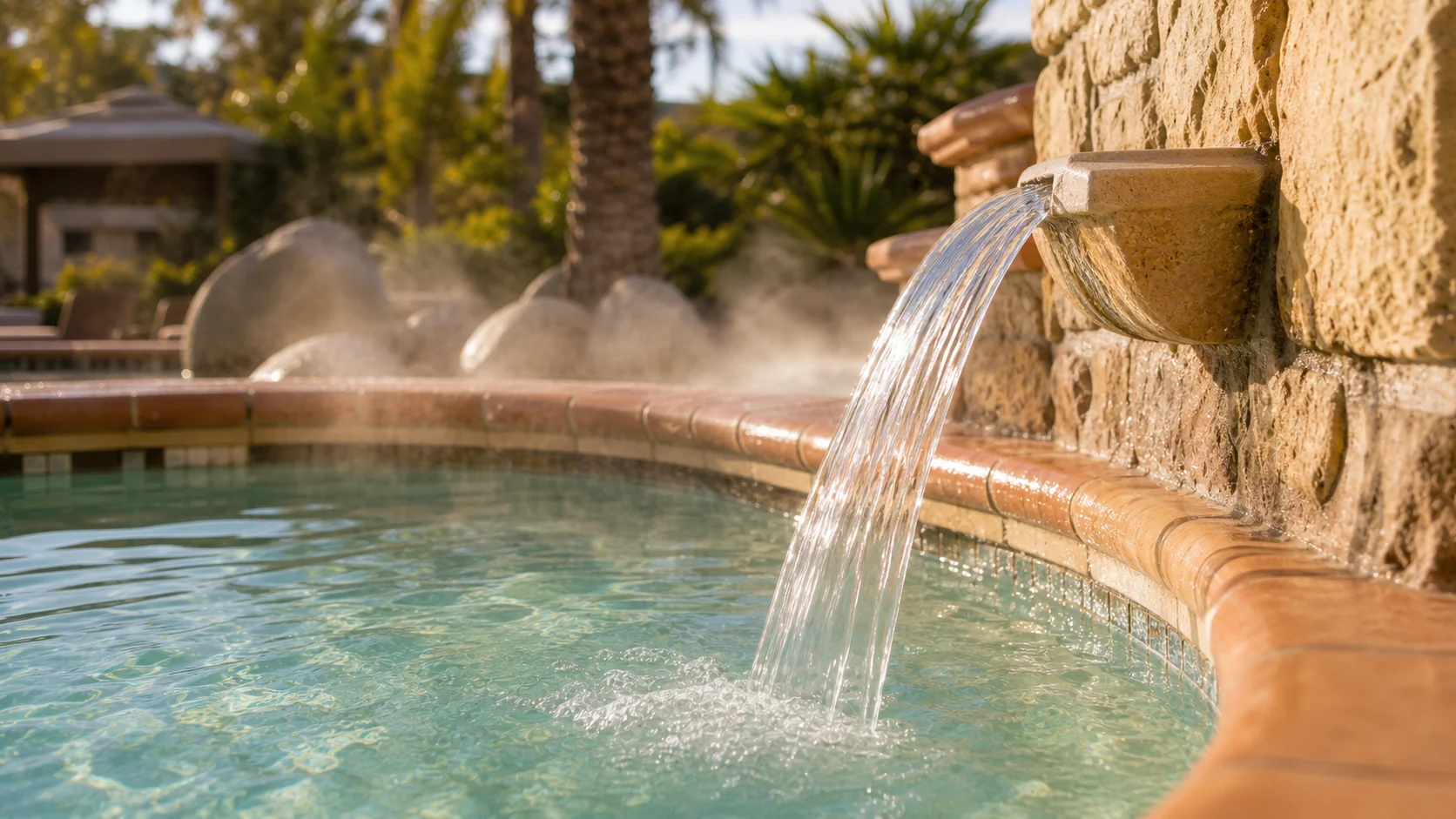
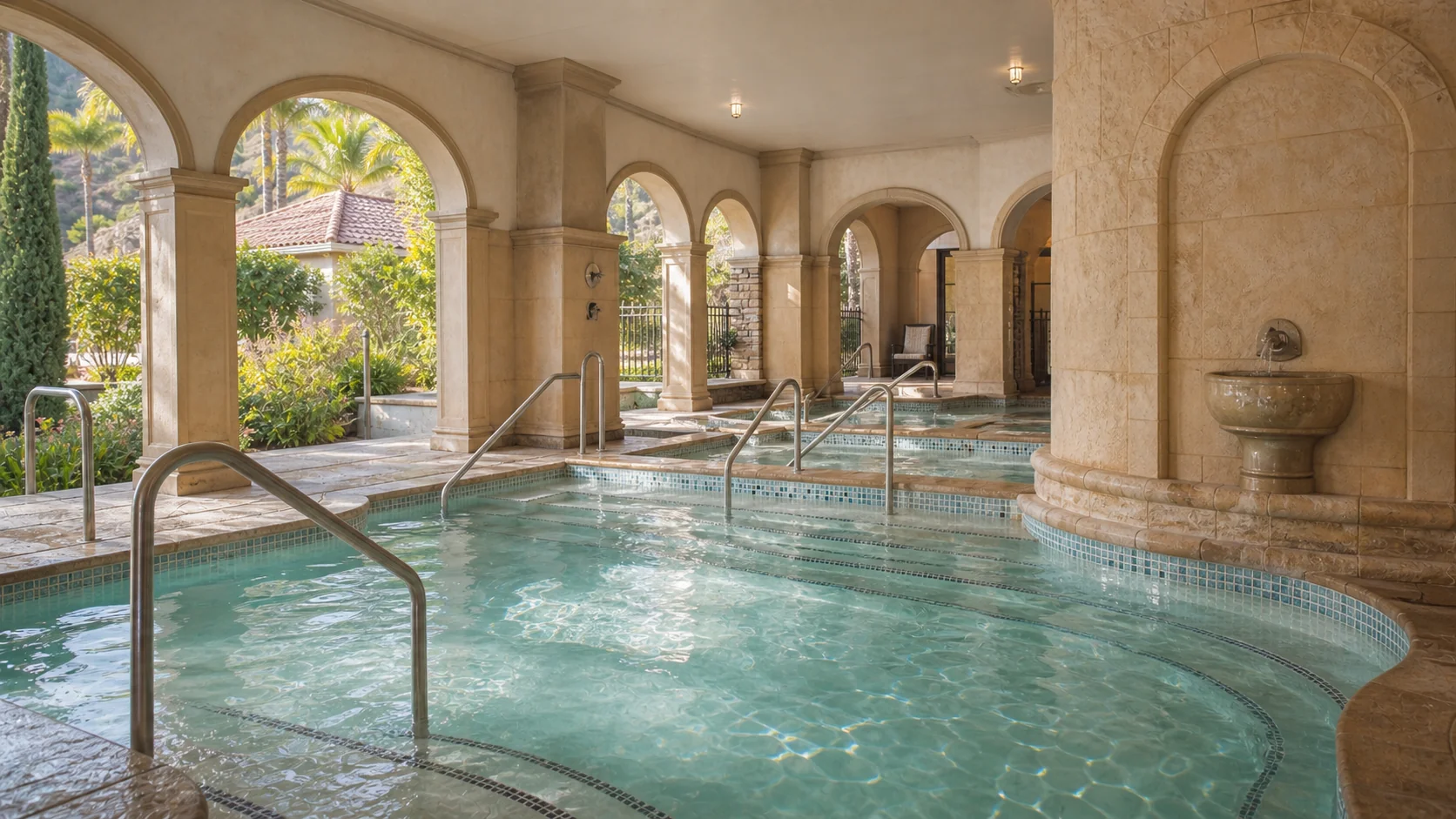
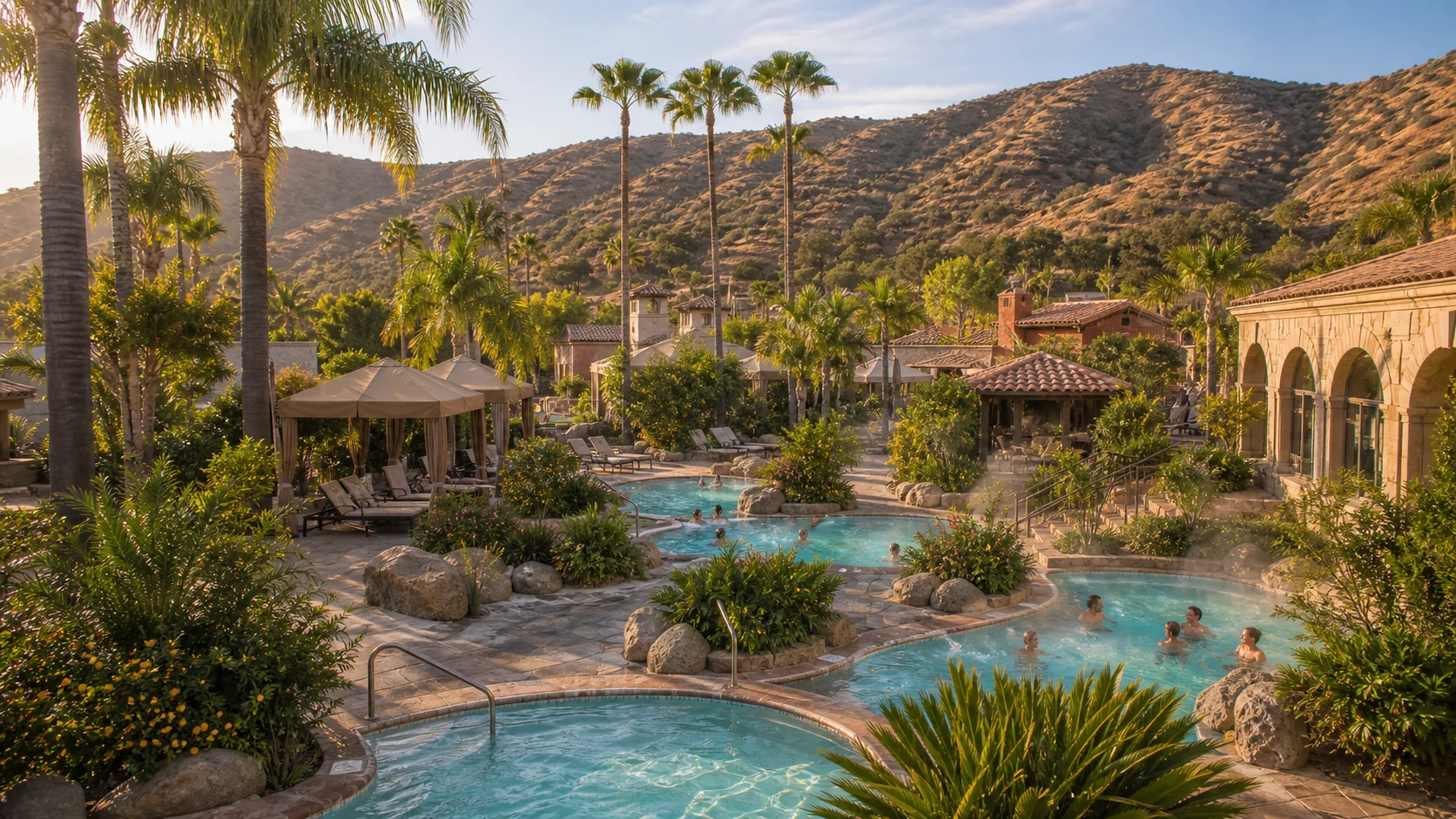
Glen Ivy has been operating as a hot springs since 1860, making it one of the oldest continuously operated mineral spas in California. The current 19-pool footprint reflects more than a century of incremental expansion: the historic Roman Baths anchor the property, the saline pools were added to give visitors a non-mineral option, and Club Mud (a therapeutic red clay bath) became the resort's signature draw.
The structure of the visit is what makes Glen Ivy distinct. Most hot springs hand you a wristband and let you wander. Glen Ivy is designed as a rotation: warm up in the saline pools, hit Club Mud, dry the clay in the warm Wafa drying chamber, peel and rinse, then graduate to the Roman Baths for the long soak, and finish with sauna and steam. The pools are not a single feature; they are a curriculum.
Club Mud itself is California's only therapeutic red clay mineral mud bath. The mud has been used continuously as a skin treatment for over a century. The Wafa is the warm drying chamber where guests stand and let the clay set; the dried clay is then wiped off in layers, taking dead skin with it. It is messy, distinctive, and the single feature most often cited in Glen Ivy reviews.
Practically, Glen Ivy is a day-only spa with no on-site lodging. The 16-and-up policy is enforced; this is not a family product. Visitors typically pair the spa with a Corona or Temecula hotel for the evening, or treat it as a serious day trip from LA, Orange County, or San Diego (all under 90 minutes). Weekends sell out fast; Monday through Friday is the better experience.